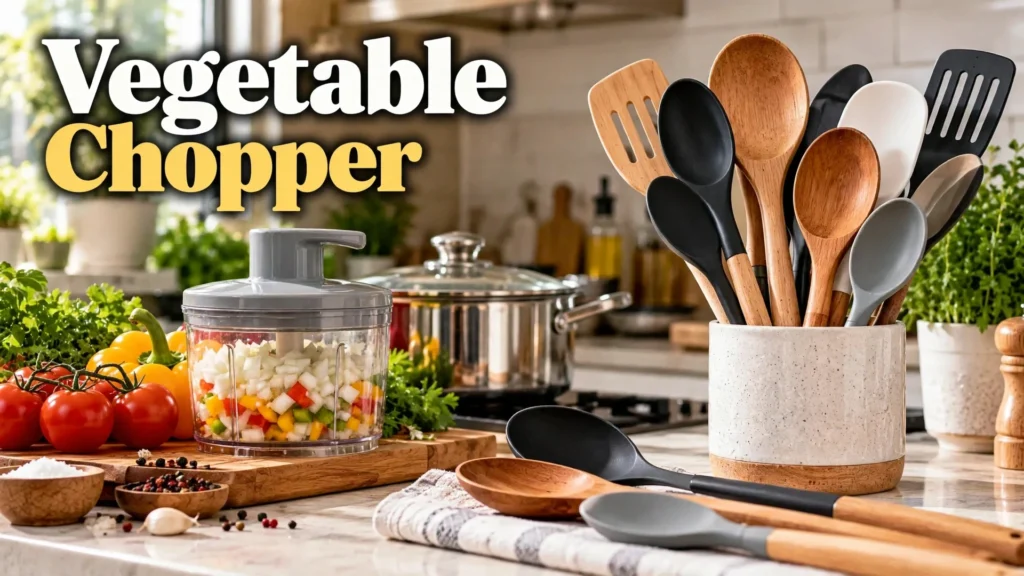
I put a vegetable chopper through weeks of real kitchen testing. This honest guide covers types, blades, features, and my top pick for you.
Chopping vegetables used to eat up my evenings. I diced onions by hand and cried through dinner prep. Then I bought a vegetable chopper on a whim. That little tool cut my prep time in half. This guide shares everything I learned since.
Not every vegetable chopper deserves your money. Some blades dull within weeks of regular use. Some containers crack in one dishwasher cycle. I tested several models in my own kitchen. Here is my honest breakdown of what matters.
I cook dinner at home five nights a week. That means a lot of onions and peppers.
Why I Reached for Mine Daily
Meal prep stopped feeling like a chore. I dice onions, peppers, and carrots in minutes now. My salads look better with even cuts. Uniform pieces cook at the same rate. No more half-burnt bits beside raw chunks. My kids even eat more vegetables now.
My aha moment came on the first Sunday I meal-prepped with a chopper. I finished five days of lunches in under an hour.
Before that, I avoided recipes with heavy chopping. Stir-fries felt like too much work. Now I grab the chopper without thinking twice. It also keeps my cutting board cleaner. Less mess means faster cleanup after dinner.
The Main Types of Vegetable Choppers Explained
Three main styles dominate store shelves today. Press-down choppers sit on a container base. You place food on the blade and push. Pull-string choppers use a yanked cord instead. They suit small, quick tasks best. Mandoline-style slicers cut thin, even slices. They shine on cucumbers and potatoes.
| Style | Best For | Watch Out |
|---|---|---|
| Press-down chopper | Big dicing jobs | Needs counter space |
| Pull-string chopper | Small quick tasks | Cord wears out |
| Mandoline slicer | Thin even slices | Handle with care |
| Rotary grater | Cheese and nuts | Limited to grating |
Most beginners do best with a press-down model. It handles the widest range of jobs. You will outgrow a tiny pull-string fast. Some models add spiralizer attachments too. Those turn zucchini into noodle shapes fast.
Features That Actually Matter
Sharp blades matter more than fancy extras. I look for stainless steel first. Multiple blade sizes bring real versatility. A sturdy container catches everything neatly. Non-slip feet keep the unit steady. A storage case keeps blades safe. A wide base stops tipping on smooth counters. I check that before I buy now.
I learned this the hard way. My first cheap chopper dulled in a month. The blades bent on carrots.
| Feature | Why It Matters | My Tip |
|---|---|---|
| Blade count | More cuts per tool | Four is plenty |
| Container size | Fewer emptying stops | One liter minimum |
| Dishwasher safe | Faster cleanup daily | Check blade rules |
| Storage case | Keeps blades organized | Prevents dull edges |
| Finger guard | Protects your hands | Always use it |
Skip models with flimsy plastic blades. They dull fast and frustrate you.
Blade Materials Compared
Blade material decides how long sharpness lasts. Cheap blades dull after a few weeks. Good ones stay sharp for years.
| Material | Sharpness | Care Needed |
|---|---|---|
| Stainless steel | Stays sharp longest | Hand wash best |
| Carbon steel | Very sharp initially | Dry and oil |
| Plastic blades | Dull very quickly | Skip these entirely |
Stainless steel wins for most home cooks. It resists rust and holds an edge.
My Pick: The Mueller Model
The Mueller vegetable chopper earned its counter spot. I bought it after reading hundreds of reviews. It includes nine interchangeable stainless steel blades. Dicing, slicing, grating, and chopping happen fast. The container catches every piece neatly. Onions no longer make me cry mid-prep.

The lid presses down with little effort. My wrist never aches after big batches. It stores neatly in my cabinet too. You can see the Mueller Vegetable Chopper on Amazon for full details and reviews. I wrote a deeper hands-on review of it here.
My honest take after months of use. The blades still feel sharp. The container seal still holds tight.
Size and Capacity Guide
Bigger is not always better for storage. My first chopper barely fit my cabinet. Measure your shelf space before you buy. Small kitchens suit compact models best. Families should size up one level.
| Size | Serves | Good For |
|---|---|---|
| Compact | One to two | Small kitchens |
| Medium | Three to four | Family dinners |
| Large | Five plus | Weekly meal prep |
Chopper vs Knife vs Food Processor
Each tool wins at different jobs. I still reach for my chef knife daily. But a vegetable chopper beats it for dicing. Food processors handle huge batches well. They also create more dishes to wash. The chopper also keeps pieces uniform. That uniformity matters for even cooking.
| Tool | Speed | Cleanup |
|---|---|---|
| Push-down dicer | Fast dicing | Quick rinse |
| Chef knife | Versatile cuts | One board only |
| Food processor | Huge batches | Many parts |
For weeknight dinners, the chopper wins. For one onion, a knife is faster.
Care and Cleaning Tips
Rinse blades right after every use. Dried food dulls edges over time. Most containers survive the dishwasher fine. Hand wash blades to keep them sharper. A small brush clears stuck bits fast. Dry blades fully before storing them. Moisture causes spots on steel edges.
Quick tip from my routine. I rinse within a minute of finishing. My blades still look new.
| Method | Time | Notes |
|---|---|---|
| Quick rinse | Thirty seconds | Right after use |
| Dishwasher | Full cycle | Container parts only |
| Hand wash | Two minutes | Blades stay sharper |
Mistakes I Made So You Can Skip Them
Do not force hard vegetables through tiny blades. Cut them into smaller chunks first. Never push food down with bare fingers. Always use the finger guard provided. Store blades where they cannot dull. Cheap impulse buys cost more long term. I skipped the finger guard once. One nick taught me that lesson. Read my guide on buying kitchen gadgets without wasting money before you shop.
Warning from my wallet. I once bought two cheap choppers in a year. One good tool would have cost less.
Frequently Asked Questions
Is a vegetable chopper worth buying?
Yes, if you cook vegetables often. I save about fifteen minutes daily. The tool pays for itself within weeks of regular use.
Can a vegetable chopper handle hard vegetables?
Yes, with the right technique. Cut carrots into smaller chunks first. Use firm, steady pressure on the lid. Avoid forcing whole pieces through the blades.
How do I clean a vegetable chopper safely?
Rinse the blades right after use. Use the small brush for stuck bits. Keep fingers clear of sharp edges always. Hand wash blades to keep them sharp longer.
Do I still need a knife?
Absolutely. A knife handles delicate work better. Herbs and large squash still need a blade. The chopper covers the boring dicing.
Which blade works best for onions?
The medium dice blade is my go-to choice daily. It makes perfect pieces for soups and salads. Switch to fine dice for salsas.
My Final Take
A good vegetable chopper earns its counter space. Start with a proven model and learn your routine. You will wonder how you cooked without it. See my roundup of the best vegetable choppers for more options. Then grab the one that fits your kitchen. Check the Mueller Vegetable Chopper on Amazon and start prepping faster tonight. Your weeknight dinners will thank you.