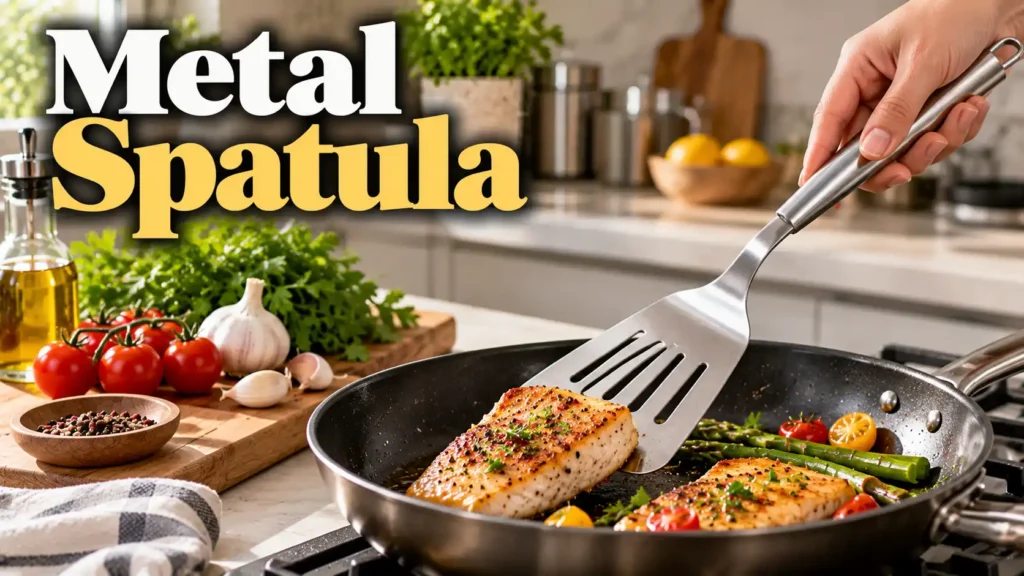
I used to baby my cast iron pans with thick plastic turners. Then I bought my first metal spatula and changed how I cook forever.
My early attempts left ugly scratches because I held the blade all wrong. Once I fixed my angle, fried eggs slid like ice on glass.
My First Metal Spatula Test and Quick Verdict
Yes, a thin steel blade is safe and vital for uncoated pans. It lifts crispy crusts cleanly while smoothing rough iron over time.
My Kitchen Wake-Up Call: Switching to thin steel stopped my burgers from tearing in half. I got all the crispy brown bits onto the bun instead of the sink.
Here is what changed the first week I made the switch:
- Zero melted plastic: Steel handles 500-degree searing heat without warping or smoking.
- Cleaner crust release: A tapered edge slips right under stuck cheese and meat.
- Smoother pan floors: Daily scraping knocks down rough iron bumps over a few months.
- Faster pan cleanup: You can scrape stuck food off while the pan stays hot.
Which Pans Can Handle Steel Blades Safely
Only bare metal pans like cast iron, carbon steel, and stainless steel handle steel blades. Coated pans scratch right away and lose their slick release power.
I tested four blade shapes across five pan types in my own kitchen. You must match the stiffness of your blade to the pan surface.
| Option I Tried | Best Use Case | My Honest Verdict |
|---|---|---|
| Slotted fish turner | Eggs and flaky white fish | Best daily tool for bare pans |
| Stiff burger turner | Smashing beef patties flat | Essential for heavy cast iron searing |
| Flat griddle scraper | Chopping steak on griddles | Great flat, bad for curved walls |
| Solid square turner | Pancakes and grilled cheese | Good all-rounder with rounded corners |
Why This Tool Works or Backfires in Real Kitchens
A metal spatula works because its thin edge slides under food without pushing it. It backfires only when you use sharp corners or pick coated pans.
When meat sears in a hot pan, it leaves tasty brown bits called fond. Soft rubber rides over fond, but thin steel lifts that flavor layer intact.
- Thin edge entry: Steel blades taper down to half a millimeter at the tip.
- Firm wrist control: The blade will not fold when you lift a thick steak.
- Self-polishing action: Steel shaves off burnt carbon lumps without hurting good oil layers.
Hidden Risks That Ruin Delicate Cookware
Using steel on nonstick or ceramic pans destroys the slick coating in one meal. Even one deep scratch lets food stick and causes peeling later.
Never let a steel blade touch these four surfaces in your kitchen:
- Teflon nonstick pans: One slip cuts a permanent trench into the soft coating.
- Ceramic skillets: Steel cracks the thin glass layer and ruins slick release.
- Enameled Dutch ovens: Hard edges leave gray marks and chip the glass floor.
- Tin-lined copper pots: Soft tin gouges easily under sharp steel pressure.
| Common Advice | My Real-World Test | Better Move |
|---|---|---|
| Steel strips pan seasoning | Flat scraping made iron smoother | Scrape flat at fifteen degrees |
| One blade fits all meals | Thin blades bent on burgers | Own one thin, one stiff blade |
| Sharp corners cut meat well | Sharp tips gouged pan grooves | Buy blades with rounded corners |
| Thicker steel is always better | Thick edges tore sunny eggs | Use thin tapered tips for eggs |
Safety Warning: Check the bottom corners of a new blade with your thumb before cooking. Factory stamps often leave sharp burrs that dig tracks into good pans.
Exact Blade Specs and Safe Angles I Follow
Hold your blade at a 15-degree angle and match blade thickness to food weight. Keeping the angle low prevents edge gouging while boosting lifting power.
I measured my favorite kitchen turners with a digital caliper to see why they worked. A fraction of a millimeter changes how a blade flexes under load.
Choosing the Right Metal Spatula Blade Thickness
Pick a 0.8-millimeter blade for delicate eggs and a 1.5-millimeter blade for smash burgers. This two-tool setup covers every stovetop task without bending or tearing food.
When shopping for a metal spatula, look for these four build traits:
- Beveled front lip: The front edge should slope down like a tiny ramp.
- Rounded corner radius: Smooth front tips never catch on curved skillet walls.
- Full tang handle: The steel strip runs all the way through the grip.
- Three tight rivets: Metal pins keep wood handles from wobbling over time.
| Size / Scenario | Exact Amount | How Often |
|---|---|---|
| Delicate fish and eggs | 0.8 mm blade thickness | Every breakfast and fish night |
| Daily all-purpose flipping | 1.0 mm blade thickness | Daily sautéing and potatoes |
| Heavy smash burgers | 1.5 mm blade thickness | Whenever pressing meat flat |
| Safe flipping angle | 15 to 20 degrees | Every slide under hot food |
How I Use My Metal Spatula Step by Step
Preheat your pan, warm the oiled blade for three seconds, and slide in flat. This simple habit stops cold steel from sticking to hot proteins.
Most cooks grab a cold turner and jam it straight under a cooking egg. The cold steel shocks the egg white and makes it cling right away.
Prepping the Pan and Blade Before Flipping
Heat your pan for five minutes, add oil, and coat the blade tip first. An oiled, warm blade slips under delicate food with zero drag.
- Preheat the bare pan: Warm your cast iron on medium heat for five minutes.
- Add cooking fat: Swirl one tablespoon of oil across the hot floor.
- Warm the blade tip: Dip the flat steel edge into hot oil for three seconds.
- Slide in at 15 degrees: Wait for a crust, then glide under in one flat stroke.
Time-Saving Shortcut: Always dip your blade tip in hot pan oil before flipping fried eggs. That three-second warm-up stops runny whites from gluing onto cold steel.
Scraping Fond and Cleaning Up Without Gouging
Scrape stuck bits flat while the pan is warm, then rinse with hot water. Waiting until the pan cools turns soft grease into hard cement.
- Add warm water: Splash two tablespoons of warm water into the empty hot pan.
- Push flat in lanes: Hold the blade at 20 degrees and scrape stuck bits loose.
- Dry and oil iron: Rinse the pan, dry on the stove, and rub on oil.
- Hand wash the turner: Wash your metal spatula with soap and towel dry the grip.
| Step | Time Needed | Key Shortcut |
|---|---|---|
| Preheat skillet on medium | 5 minutes | Test heat with one water drop |
| Warm blade in pan oil | 3 seconds | Coat both sides of the tip |
| Slide under at 15 degrees | 2 seconds | Let food crust form first |
| Scrape pan while warm | 30 seconds | Add a splash of warm water |
Rookie Mistakes I Made Early On and How I Fixed Them
My biggest mistake was digging into stuck food with sharp factory blade corners. Switching to flat strokes and sanding the corners saved my cookware.
Within three weeks of dishwashing my turner, the hot cycle cracked its wood grip. Rust spots formed under the loose rivets and stained my dish towel.
Warning Signs Your Technique Is Hurting Your Pan
Loud screeching sounds and shiny silver lines mean your blade angle is too steep. Black flakes in your pan are usually burnt food, not ruined iron.
Watch for these three signs that your flipping habit needs a quick tweak:
- High metal screech: You are holding the blade too steep and dragging a corner.
- Shiny silver grooves: You pressed too hard and cut through the dark oil layer.
- Black gritty flakes: Old burnt carbon is peeling off from past meals.
| My Early Mistake | What Happened | What I Do Now |
|---|---|---|
| Jabbing with blade corners | Gouged silver lines in iron | Keep the front edge flat |
| Dishwashing wood handles | Wood cracked and rivets rusted | Hand wash in 20 seconds |
| Flipping meat too early | Torn crust stuck to steel | Wait for natural crust release |
| Using stiff blades on eggs | Pushed yolks across the pan | Use a thin fish turner |
My 2-Minute Sandpaper Fix: Wrap 400-grit wet sandpaper around a sponge and rub the blade corners ten times. It rounds off factory burrs so your turner glides like a skate.
Smart Swaps When Steel Is the Wrong Choice
Reach for silicone or wood whenever you cook in nonstick, ceramic, or enameled pans. Saving your metal spatula for bare metal keeps every pan in top shape.
Keep these three backup tools near your stove for coated cookware:
- Thin silicone turner: A steel core wrapped in silicone flips eggs in nonstick pans — see my Silicone Cooking Utensils guide for the full heat test.
- Flat wood spurtle: Olive wood scrapes fond from enameled pots without leaving gray marks.
- Nylon fish turner: Great for ceramic skillets when you want a slotted flexible blade.
FAQs for Metal Spatula
Can I use a metal spatula on cast iron every day?
Yes, daily use improves cast iron pans over time. Flat steel blades knock down high rough spots and build a glass-smooth cooking surface.
Will a metal spatula ruin my pan seasoning?
No, flat steel blades will not strip baked-on seasoning. Only gouging with sharp corners removes true oil layers, so keep your blade flat.
What is the best thickness for an everyday steel turner?
A 1.0 millimeter blade with a tapered edge works best. It stays stiff enough for heavy burgers yet thin enough to slide under fried eggs.
Is a slotted fish turner strong enough for smash burgers?
No, thin slotted fish turners bend under heavy burger pressure. You need a solid 1.5 millimeter stainless steel blade to press meat flat.
How do I stop my steel blade from scratching pans?
Sand the sharp bottom corners with 400-grit wet sandpaper. Rounding those edges takes two minutes and stops the blade from digging into iron.
My Final Verdict on Upgrading Your Daily Flipping Tool
A thin, rounded metal spatula is the best upgrade you can buy for bare pans. It turns stuck meals into crisp, easy flips while smoothing rough iron daily.
Grab your current turner right now and test its front corners with your thumb. Spend five minutes today sanding down any sharp burrs before you cook dinner tonight.
For the six core tools I reach for every night, see my Kitchen Utensil Set Guide.