
Learn how to season a cast iron skillet on the stove in 15 minutes using my tested thin-oil method for a slick, rust-free finish today.
My kitchen filled with thick blue smoke the first time I tried to fix my rusty pan. Learning how to season a cast iron skillet on the stove saved my dinners and kept my house cool.
You do not need a hot oven running for two hours to get a slick pan. Five minutes of direct burner heat bonds a fresh, hard oil coat right onto the iron.
What Most Guides Leave Out About How to Season a Cast Iron Skillet on the Stove
Most guides forget to tell you that using too much oil ruins your pan and creates a sticky, gummy mess. When you learn how to season a cast iron skillet on the stove, wiping off almost all the oil is the real secret.
My first attempt failed because I left a shiny puddle in my 12-inch Lodge skillet. Heat turned that puddle into raised brown bumps that grabbed onto my morning eggs.
| Common Advice | My Real-World Test | Better Move |
|---|---|---|
| Coat pan in thick oil | Left sticky brown tar | Buff until pan looks dry |
| Crank heat to maximum | Burned off central coat | Use medium-high dial 6 |
| Use expensive flaxseed oil | Flaked off in three weeks | Grab cheap grapeseed oil |
| Skip soap before oiling | Baked old food into iron | Wash with mild dish soap |
Now I buff the metal until it looks bone dry before turning on the burner. Here is what changed when I fixed my method:
- Micro-thin oil layers bond directly to tiny iron pores without pooling.
- Even burner heat stops the middle from burning while the rim stays raw.
- Fast smoke timing tells you the exact second the oil turns into hard plastic.
- Swirling the pan moves heat up the sloped metal walls.
My Biggest Lightbulb Moment: If the pan looks wet with oil before you turn on the heat, you have ten times too much oil in there. Wipe it like you accidentally poured poison in it.
Tools and Supplies I Actually Use on My Burner
You only need a clean cotton rag, a pair of tongs, and a high-smoke-point cooking oil for stovetop seasoning. You can skip fancy wax pucks and expensive linen towels that blogs love to push.
I tested six oils over two years on my daily 10-inch skillet. Grapeseed oil and plain canola oil beat pricey specialty blends every single time.
| Option I Tried | Best Use Case | My Honest Verdict |
|---|---|---|
| Grapeseed oil | Smooth daily slickness | My top pick at 420°F |
| Canola oil | Budget pantry backup | Works great at 400°F |
| Avocado oil | High-heat searing pans | Needs 520°F to bond well |
| Crisco shortening | Deep rust recovery | Messy to scoop out |
| Olive oil | Never for seasoning | Smokes early and turns sticky |
| Bacon grease | Quick post-breakfast wipe | Smells good but goes rancid |
Grab these simple items from your kitchen drawers before you flip on the stove:
- 1 teaspoon grapeseed or canola oil for a durable, glassy black finish.
- Old cut-up cotton t-shirt since cheap paper towels leave white lint behind.
- Metal kitchen tongs to hold the cloth against 450°F iron safely.
- Chainmail scrubber to knock off crusty carbon bits during prep.
- Infrared laser thermometer if you want to check exact surface temps.
My Step-by-Step Workflow for How to Season a Cast Iron Skillet on the Stove
My stovetop routine takes twelve minutes from sink to burner and builds three rock-hard layers in one session. Knowing how to season a cast iron skillet on the stove comes down to watching the smoke and controlling your burner dial.
| Step | Time Needed | Key Shortcut |
|---|---|---|
| Scrub and bone-dry | 2 minutes | Evaporate water over low heat |
| Buff in 3 oil drops | 1 minute | Use tongs and cotton rag |
| Smoke out the oil | 4 minutes | Stop 30 seconds after smoke fades |
| Repeat thin coats | 5 minutes | Add oil while pan is still hot |
Step 1: Scrub and Heat-Dry the Bare Iron
Start by scrubbing off stuck food with warm soapy water and heating the pan on low for two minutes. A towel never gets water out of microscopic iron pits, so burner heat is required.
- Scrub the pan in the sink with two drops of dish soap and warm water.
- Dry the surface right away with a clean dish towel.
- Set the skillet on a burner over medium-low heat (level 3) for two minutes.
- Watch the dull gray metal turn slightly lighter as trapped moisture steams away.
Step 2: How to Season a Cast Iron Skillet on the Stove With Three Oil Drops
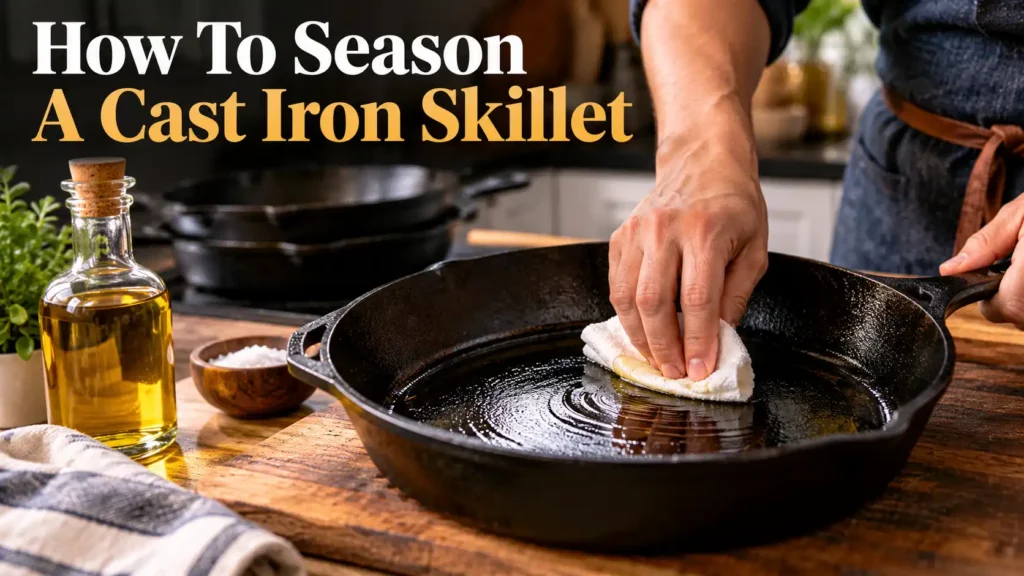
Drop a quarter-sized dot of grapeseed oil into the warm pan and buff every inch until zero shine remains. Mastering how to season a cast iron skillet on the stove requires rubbing oil into the cooking base, side walls, and outer bottom.
- Pour 1/2 teaspoon of grapeseed oil into the warm, dry skillet.
- Grip a folded cotton rag with your metal tongs.
- Rub the oil across the flat floor, inside walls, handle, and bottom ring.
- Flip to a dry corner of your rag and buff hard for 30 seconds to remove excess oil.
Finger Safety Warning: Never hold the oiling rag with your bare fingers once the burner is on. Cast iron holds brutal heat, and steam or hot oil transfers through thin cloth in one second.
Step 3: Hit the Smoke Point and Cure the Layer
Turn your burner to medium-high and heat the pan for four minutes until wisps of white smoke appear and fade. That smoke means the liquid fat has broken down and bonded to the metal.
- Crank the stove dial up to medium-high (level 6 or 7 out of 10).
- Shift the pan around the burner ring every 45 seconds so the edges get hot.
- Watch the surface darken from matte gray to a wet-looking satin black.
- Let the pan smoke lightly for 60 seconds until the fumes slow down.
- Turn off the heat and let the iron cool down until it feels warm to the touch.
Shortcuts That Cut My Stovetop Time in Half
Seasoning right after cooking dinner skips the preheating step and finishes the job in ninety seconds flat. Because the iron is already hot from searing meat, the pores are open and ready for oil.
I used to wait until Saturday morning to care for my pans. Now I piggyback on my nightly dinner heat and save ten minutes every time.
- Wipe out pan drippings while the skillet is still hot off the burner.
- Rinse under steaming hot tap water to avoid shocking and warping the hot iron.
- Use residual burner heat on electric or glass tops to dry the pan for free.
- Keep a dedicated oil rag inside a mason jar by the stove for one-second wipes.
- Stack two quick coats back-to-back while the metal stays above 350°F.
Time-Saving Shortcut: Keep a squeeze bottle of grapeseed oil right next to your salt shaker. Three quick drops after washing dishes keeps your pan slick without ever scheduling a deep seasoning day.
Where Things Usually Go Wrong on the Burner
Most stovetop seasoning fails happen because the center gets too hot while the upper walls stay cold. Gas flames and electric coils focus heat in a tight circle right under the pan floor.
When I learned how to season cast iron on stovetop burners, I burned a silver ring straight into the middle of my favorite 10-inch pan. Fixing that mistake only took a slight drop in heat and a two-minute pan tilt.
| My Early Mistake | What Happened | What I Do Now |
|---|---|---|
| Left burner on high | Burned silver spot in center | Cap heat at dial 6 |
| Ignored the side walls | Rust formed near top rim | Tilt pan over flame |
| Stopped at first smoke | Oil stayed wet and sticky | Wait 60 seconds past smoke |
| Poured cold oil on hot pan | Oil flashed into thick soot | Let pan cool to 200°F first |
If your skillet looks patchy, sticky, or dull after cooling down, use this chart to fix it in two minutes:
| Warning Sign | Real Cause | My 2-Minute Fix |
|---|---|---|
| Sticky brown streaks | Used too much oil | Rub with coarse salt and re-smoke |
| Ashy gray dry center | Heat stayed too high | Wipe one drop of oil over warm center |
| Black flakes in eggs | Weak oil or dirty prep | Scrub loose bits with chainmail and oil |
| Rusty orange dust | Moisture trapped under oil | Scrub with vinegar, dry on stove, oil |
Follow these quick checks mid-process so you never have to strip your pan down to bare metal:
- Smell the air: A light nutty smell is good, while sharp acrid smoke means your burner is too high.
- Check the reflection: Glossy wet patches during heating need an immediate swipe with your dry rag.
- Match the burner size: Always pick your widest stove ring for 12-inch skillets to prevent cold rims.
Quick Fix for Sticky Pans: Do not scrub off a sticky coat with steel wool. Put the dry sticky pan back on medium-high heat for five minutes until the tacky spots smoke and harden into dry black seasoning.
My Weekly Maintenance Habit for Glassy Cast Iron
Adding one micro-layer of oil after every wash keeps your stovetop seasoning slick for decades. You never have to do a full three-coat session again once your base layer is locked in.
| Size / Scenario | Exact Amount | How Often |
|---|---|---|
| 8-inch egg skillet | 2 drops grapeseed oil | After every morning wash |
| 10-inch daily pan | 1/4 teaspoon oil | 3 times a week |
| 12-inch sear skillet | 1/2 teaspoon oil | After acidic or wet foods |
| Campfire Dutch oven | 1 full teaspoon oil | Before storing in garage |
I follow this simple three-minute habit every night after plating up dinner:
- Scrape the warm pan clean under hot running water with a stiff nylon brush.
- Set the wet pan on the warm burner for 60 seconds until every drop evaporates.
- Rub three drops of oil across the inside floor with my mason-jar rag.
- Heat just until the faintest wisp of smoke rises, then click the burner off.
Leave the pan right on the cool burner overnight so air can circulate around it. Within two weeks of doing this, you can slide a fried egg across the metal with zero spatula effort.
FAQs for How to Season a Cast Iron Skillet on the Stove
How long does it take to season cast iron on the stove?
Stovetop seasoning takes 10 to 15 minutes total, including two minutes to dry the pan, one minute to buff oil, and five minutes of smoking heat.
What is the best oil to season a cast iron pan on the stove?
Grapeseed oil and canola oil are the best choices because their 400°F+ smoke points create a hard, flexible, non-stick coat without flaking off.
Is it better to season cast iron in the oven or on the stove?
The oven is best for bare, rusty pans, while the stove is better for daily upkeep and building a super-slick cooking floor in under ten minutes.
Why is my cast iron sticky after seasoning on the stovetop?
Your pan is sticky because you left too much oil on the metal or turned the burner off before the oil finished smoking and bonding to the iron.
How do I know when my cast iron is done seasoning on the burner?
Your skillet is done when white smoke rises for 60 seconds and then fades away, leaving behind a dry, matte-black surface with zero wet spots.
Can I season a cast iron skillet on an electric or glass stove?
Yes, electric and glass stoves season cast iron great, provided you lift the pan instead of sliding it and preheat slowly on medium to prevent warping.
Keep Your Skillet Slick With One Five-Minute Habit Tonight
My biggest lesson from years of cooking on iron is that thin, frequent coats always beat one thick coat. Once you master how to season a cast iron skillet on the stove, you stop worrying about rust or stuck food and just enjoy cooking.
Walk into your kitchen tonight, set your skillet on medium heat for two minutes, and buff in three tiny drops of cooking oil until it smokes. That single five-minute move will give you a smoother, cleaner breakfast pan tomorrow morning.