Learn how to season a cast iron skillet the right way. My tested oven method stops rust and creates a slick surface in one hour.
My smoke alarm screamed the first time I baked oil onto my pan. Learning how to season a cast iron skillet took me three sticky failures to master. I poured on way too much olive oil and baked a gummy brown mess.
Since that smoky day, I have restored twelve rusty pans from flea markets. My ten-inch Lodge skillet now cooks fried eggs that slide right off the iron. Follow my exact oven routine to build a slick, rust-proof surface in one hour.
One quick note: this is my sticky-proof method — the exact routine I use when I want zero gummy residue. For the classic all-purpose oven walkthrough, see my original cast iron skillet seasoning guide.
What Most Guides Leave Out About How to Season a Cast Iron Skillet
Wiping off almost all the oil is the real secret to a slick pan. Most guides tell you to coat the iron, which causes thick, sticky puddles.
High heat bonds thin fat directly into the tiny pores of raw iron. Makers call this polymerization, which means oil bakes into hard, plastic-like armor. Too much oil cannot cure and turns into soft, sticky bumps instead.
My Biggest Lesson: Rub oil onto the iron, then buff it completely dry. Your pan should look flat and matte before it enters the hot oven.
| My Early Mistake | What Happened | What I Do Now |
|---|---|---|
| Poured two tablespoons oil | Baked into sticky brown puddles | Use half a teaspoon total |
| Used virgin olive oil | Smoked out my whole kitchen | Use refined grapeseed oil |
| Baked pan right-side up | Oil pooled in the center | Bake upside down on rack |
| Used white paper towels | Left lint baked into iron | Use blue auto shop towels |
Tools and Oils I Actually Use in My Kitchen
You only need refined cooking oil, blue shop towels, and dish soap to start. Skip the pricey cast iron waxes and brushes sold in fancy kitchen stores.
I tested six cooking fats over two years of searing steaks and cornbread. Mastering how to season a cast iron skillet starts with picking a high-heat oil.
| Option I Tried | Best Use Case | My Honest Verdict |
|---|---|---|
| Grapeseed oil | Full oven seasoning coats | My top pick for durability |
| Refined canola oil | Budget everyday pan care | Works great and costs pennies |
| Crisco shortening | Restoring pitted vintage pans | Easy to spread thin coats |
| Flaxseed oil | Dark showroom display pans | Looks pretty but flakes fast |
| Bacon grease | Cooking breakfast right away | Goes rancid during long storage |
I keep these four cheap items under my kitchen sink for pan care:
- Refined grapeseed oil: It smokes at 420 degrees and dries into a rock-hard black shell.
- Scott blue shop towels: They never shed white paper fuzz onto rough cast iron surfaces.
- Steel chainmail scrubber: It knocks off burnt food without scratching your dark seasoning layer.
- Cheap oven gauge: My oven runs cool, which ruined my first two pan tests.
My Tested Workflow on How to Season a Cast Iron Skillet
My oven method bakes thin layers of grapeseed oil at 450 degrees Fahrenheit. Give yourself ninety minutes from initial sink scrub to a cooled, ready-to-cook skillet.
Step 1: Scrubbing and Drying the Bare Iron
Wash your skillet with warm soapy water to strip away factory wax or dust. Even brand-new pans carry warehouse grime that keeps fresh oil from bonding well.
- Scrub the pan: Use hot water, dish soap, and a stiff nylon brush.
- Clear away rust: Rub orange spots with steel wool until bare gray metal shows.
- Towel dry fast: Wipe the pan dry right away with a clean cotton towel.
- Warm on the stove: Heat the pan for three minutes to dry tiny metal pores.
Step 2: How to Season a Cast Iron Skillet With Thin Oil
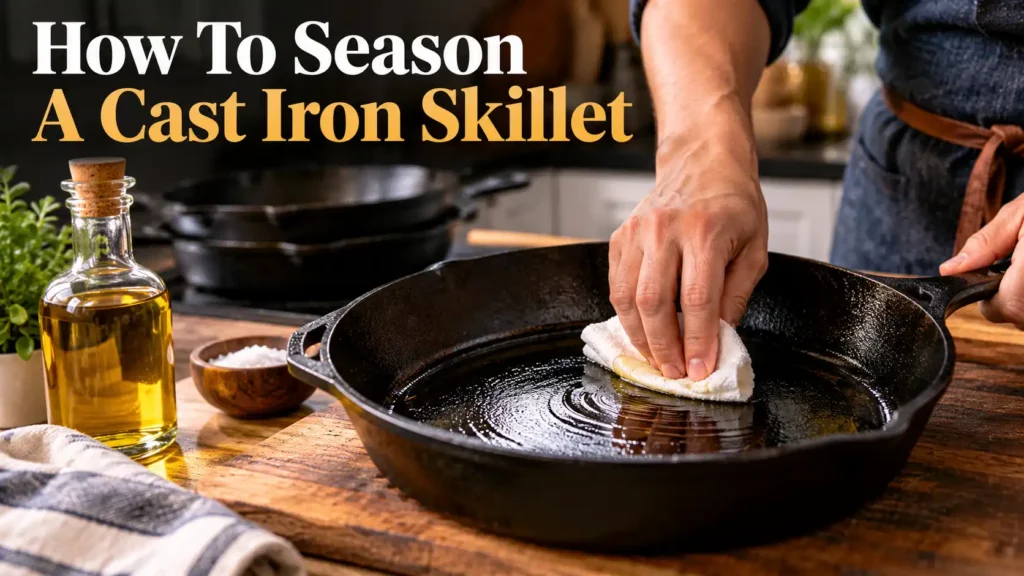
Pour half a teaspoon of oil into the warm pan and buff it dry. Warming the iron first helps the oil spread into an even, micro-thin coat.
- Add measured oil: Drop half a teaspoon of grapeseed oil into the warm skillet.
- Coat all sides: Rub oil inside, outside, and over the handle with one towel.
- Buff it dry: Use a fresh dry towel to wipe off all shiny oil.
| Size / Scenario | Exact Amount | How Often |
|---|---|---|
| 8-inch small skillet | 1/4 teaspoon oil | Every 6 months |
| 10-inch daily skillet | 1/2 teaspoon oil | Every 4 months |
| 12-inch deep skillet | 3/4 teaspoon oil | Every 4 months |
| Stripped rusty pan | 3 thin baked coats | Once during restoration |
Step 3: Baking Upside Down at 450 Degrees
Place your oiled skillet upside down on the middle oven rack at 450 degrees. Baking it for sixty minutes turns the thin oil film into hard black armor.
Set a sheet of foil on the lower rack to catch stray drips. Crack a kitchen window and turn on your hood fan before the oven heats.
Safety Warning: Never grab a hot skillet with a damp cotton dish towel. Steam flashes through wet fabric in one second and burns your hand badly.
Step 4: Cooling Slowly Inside the Closed Oven
Turn off the oven after one hour and let the pan cool inside. Leaving the door shut for two hours prevents warping and strengthens the oil bond.
Wait until you can hold the iron handle comfortably with your bare hand. For a stripped bare pan, repeat this oiling and baking cycle two more times.
Simple Shortcuts That Cut My Seasoning Time in Half
A five-minute stovetop touch-up replaces full oven baking ninety percent of the time. Once your base coat is solid, you rarely need to heat your whole oven.
| Step | Time Needed | Key Shortcut |
|---|---|---|
| Dry washed pan | 2 minutes | Use medium stove burner |
| Wipe thin oil drop | 30 seconds | Hold towel with tongs |
| Heat to first smoke | 2 minutes | Turn burner off fast |
| Bake two pans together | 60 minutes | Fit side by side |
These three habits save me hours of kitchen work every single month:
- Batch bake pans: Fit two skillets on one rack to save an hour.
- Use the stove trick: Heat your oiled pan until light smoke rises.
- Cook fatty meals: Fry bacon or cornbread to build slick layers during dinner.
My Favorite Shortcut: Hold your shop towel with metal tongs when oiling a hot pan. You can buff hot iron in ten seconds without burning your fingers.
Where Things Go Wrong Mid-Process and How I Fix Them
Almost every seasoning mistake can be fixed in five minutes without stripping the pan. You do not need harsh lye baths or oven cleaner for minor surface flaws.
Even after mastering how to season a cast iron skillet, I hit small snags. Instead of starting over, I match a quick fix to each pan flaw.
| Warning Sign | Real Cause | My 2-Minute Fix |
|---|---|---|
| Sticky brown marks | Left too much oil | Bake 30 minutes longer |
| Black flakes in food | Used brittle flaxseed oil | Scrub loose bits off |
| Orange flash rust | Air dried wet iron | Scrub with oil and salt |
| Dull gray patch | Cooked sour tomato sauce | Do one stove oil wipe |
Quick Rust Rescue: Never toss out a rusty skillet from a yard sale. Dip half a raw potato in coarse salt and scrub the orange rust off.
My Quick Post-Dinner Habit That Keeps Pans Non-Stick
Clean your warm pan with water, heat it dry, and rub on two oil drops. This ninety-second habit after dinner keeps your skillet black and slick for decades.
Modern liquid dish soap contains zero lye and will never strip cured seasoning. I also use a flat metal spatula daily to smooth out bumpy iron pans.
| Common Advice | My Real-World Test | Better Move |
|---|---|---|
| Never touch dish soap | Left old grease behind | Wash with mild dish soap |
| Clean with salt only | Burnt food stayed stuck | Use steel chainmail scrubber |
| Soak dirty pan overnight | Rusted rim by morning | Scrape warm pan right away |
| Avoid metal tools | Surface stayed rough longer | Use flat metal spatula |
FAQs for how to season a cast iron skillet
What is the best oil for seasoning a cast iron skillet?
Grapeseed oil and canola oil work best for cast iron pans. Both handle 450 degrees well and bake into a smooth, dark surface.
What temperature should I use to season my cast iron pan?
Bake your oiled skillet at 450 degrees Fahrenheit for one full hour. This heat turns thin oil into a tough, non-stick surface.
Why is my cast iron skillet sticky after seasoning it?
You left too much oil on the pan before baking it. Scrub sticky spots with steel wool, wipe a thinner coat, and bake again.
How often do I need to season my cast iron skillet?
Do a full oven bake twice a year for pans you use often. After every wash, rub a tiny drop of oil onto the dry, warm metal.
Can I use olive oil or butter to season cast iron?
Skip butter and extra virgin olive oil for oven seasoning. They burn at 350 degrees and fill your kitchen with thick gray smoke.
Ready to Build Your Own Glass-Smooth Skillet Surface?
Learning how to season a cast iron skillet takes thin oil and high heat. Do not worry if your pan looks bronze or patchy during the first week. Keep cooking fatty foods, and that bronze finish will quickly turn deep matte black.
Walk into your kitchen right now and run your fingers across your skillet. If it feels dry, warm it on your stove for two minutes today. Rub in half a teaspoon of oil, buff it dry, and start cooking dinner.