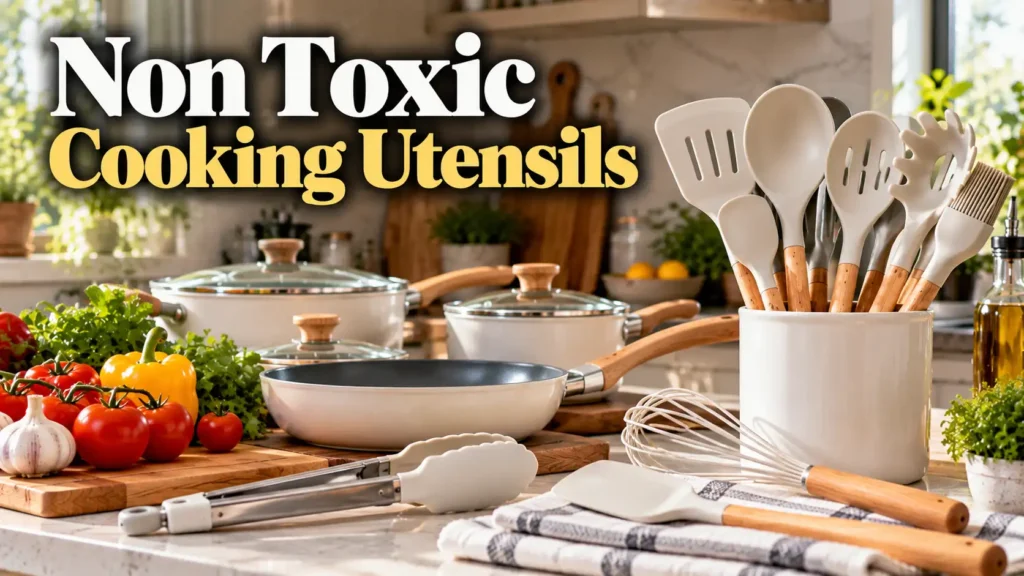
Last year, my black plastic spatula melted right into my hot skillet. That scary moment made me switch to non toxic cooking utensils for good.
I spent six months testing wood, stainless steel, bamboo, and pure silicone tools. I burned three spoons, scratched one pan, and found what truly works.
My First Time Testing non toxic cooking utensils and Quick Verdict
Switching to non toxic cooking utensils is the safest move for your daily meals. Solid stainless steel, hard maple wood, and platinum silicone never leach toxins into food.
When I first tossed my old nylon turners, I bought cheap bamboo spoons. Within two weeks, one split right down the middle in hot soup.
My Kitchen Rule: Toss any tool that smells like plastic when it gets hot. Safe tools have zero chemical odor at high heat.
| Option I Tried | Best Use Case | My Honest Verdict |
|---|---|---|
| 304 Stainless Steel | Searing meat in cast iron | Lasts forever and never melts |
| Hard Maple Wood | Stirring thick sauces and stews | Gentle on pans and sturdy |
| Platinum Silicone | Scraping bowls and warm pans | Safe up to 428 degrees |
| Glued Bamboo | Tossing cold green salads | Splits fast in hot water |
Which non toxic cooking utensils Worked Best on My Stove
Hardwood spoons and 304 stainless steel spatulas beat every other material in my kitchen. They handle daily frying, boiling, and scraping without warping or shedding tiny bits.
- 304 Stainless Steel: Handles 800-degree sear heat without bending or rusting.
- Hard Maple Wood: Tight wood grain blocks stains and fights germs.
- Cherry Wood: Smooth edges glide across enamel pots without scratching.
- Platinum Silicone: Pure rubber scrapes every drop from nonstick pans.
- Solid Olive Wood: Dense wood stays smooth with monthly oil care.
Why non toxic cooking utensils Work or Backfire in Real Life
Safe kitchen tools stop melted plastic and chemical toxins from entering your hot food. However, using the wrong safe material on the wrong pan can ruin your cookware.
Old black plastic tools often come from recycled electronics with flame retardants. What surprised me most was how cheap silicone traps dish soap smells.
| Common Advice | My Real-World Test | Better Move |
|---|---|---|
| All silicone is safe | Cheap ones turned white when bent | Buy 100% platinum silicone only |
| Wood holds bad germs | Dry maple killed bacteria naturally | Stand wood upright to dry |
| Bamboo equals hardwood | Glued bamboo split in hot broth | Pick single-piece carved maple |
| Dishwashers clean best | High heat cracked my cherry spoon | Hand wash wood in seconds |
The Pinch Test I Use to Spot Fake Silicone
Twisting a silicone spatula reveals cheap chemical fillers in less than five seconds. Pure platinum silicone keeps its solid color when bent hard.
- Grab the blade: Hold the widest part of the silicone head firmly.
- Twist it hard: Bend the rubber tip back until it stretches tight.
- Check for lines: Look closely at the fold under a bright light.
- Grade the result: Solid color means pure rubber, while white streaks show fillers.
Aha Moment: Two of my pricey spatulas showed white streaks during the pinch test. I swapped them for single-piece platinum silicone tools right away.
I break down the full five-second pinch test in my Silicone Cooking Utensils guide.
Exact Heat Limits and Pan Rules I Follow Every Day
Every safe tool has a strict heat ceiling and a matching pan surface. Staying below 428 degrees with silicone and matching metal to iron prevents damage.
I measured my skillet surfaces with an infrared thermometer during dinner prep. My dry cast iron pan hit 515 degrees in just four minutes.
Heat Warning: Never leave a silicone or wood spoon resting inside a hot skillet. High pan heat scorches soft silicone tips in under two minutes.
| Size / Scenario | Exact Amount | How Often |
|---|---|---|
| Searing steak at 500°F | 12-inch 304 steel turner | Every high-heat cast iron meal |
| Simmering sauce at 212°F | 14-inch hard maple spoon | Daily for soups and sauces |
| Scrambling eggs at 300°F | 10-inch platinum silicone spatula | Every morning on ceramic pans |
| Oiling dry wood tools | 1 teaspoon food-grade mineral oil | Once every 3 to 4 weeks |
Matching Your Tool to the Right Cookware Surface
Pairing soft tools with delicate pans and metal tools with raw iron stops scratches. This simple rule keeps both your pans and your spoons safe for years.
- Cast Iron Skillets: Use 304 steel turners to scrape up browned bits.
- Carbon Steel Woks: Use long wood or steel tools for high heat.
- Ceramic Nonstick Pans: Stick to soft silicone or maple to prevent scratches.
- Enameled Dutch Ovens: Use cherry wood spoons to protect the glass glaze.
- Stainless Steel Pots: Any safe wood, steel, or silicone tool works here.
My Step-by-Step Prep and Care Routine for Safe Kitchen Tools
Prepping new wood with oil and washing tools by hand triples their lifespan. My ten-minute monthly care habit stops wood cracks and sticky silicone build-up.
Raw wood spoons arrive from the store dry, thirsty, and slightly rough. If you drop dry wood straight into tomato sauce, the stain stays forever.
| Step | Time Needed | Key Shortcut |
|---|---|---|
| Sand rough wood edges | 2 minutes | Rub with 220-grit sandpaper once |
| Rub with mineral oil | 3 minutes | Warm the oil slightly in hands |
| Wash right after cooking | 30 seconds | Rinse with hot water right away |
| Bake out silicone odors | 20 minutes | Heat at 350°F on clean tray |
How I Season New Wood Spoons Before First Use
Sealing new wood spoons with mineral oil blocks water, stains, and food odors. I never use olive or corn oil because food oils turn sticky and sour.
- Wash and dry: Rinse the new spoon with warm water and dry overnight.
- Pour safe oil: Put one teaspoon of mineral oil onto a soft cloth.
- Rub the grain: Coat the bowl and handle until the wood looks wet.
- Add beeswax balm: Rub a dab of beeswax over the tip for defense.
- Buff it dry: Wait twenty minutes, then wipe off extra oil with cloth.
Time Shortcut: I oil all six wood spoons on the first Sunday each month. Doing the whole batch at once takes just four minutes.
Rookie Mistakes I Made Early On and How I Fixed Them
Ruining three good spoons taught me how water, heat, and glue hurt safe tools. Avoiding long sink soaks and two-piece spatulas saves you money and stress.
In my first month, I bought cute silicone spatulas with wooden handles. Dirty dish water got trapped inside the joint and grew black mold fast.
| My Early Mistake | What Happened | What I Do Now |
|---|---|---|
| Bought 2-piece spatulas | Mold grew inside the handle seam | Buy 1-piece seamless tools only |
| Left wood in the sink | Spoon swelled up and split open | Wash and stand upright right away |
| Used olive oil on wood | Handle turned sticky and smelled sour | Use pure mineral oil and beeswax |
| Put silicone in dishwasher | Spatula tasted like dish detergent | Hand wash with unscented soap |
Quick Diagnostic Check When Tools Start Acting Up
Most sticky, smelly, or rough kitchen tools can be saved in two minutes. You only need to toss a utensil if it has deep cracks or melted tips.
| Warning Sign | Real Cause | My 2-Minute Fix |
|---|---|---|
| Wood feels fuzzy or rough | Water raised the dry wood grain | Sand lightly with 220-grit paper |
| Silicone feels slick or sticky | Trapped cooking oil on rubber | Scrub with baking soda paste |
| Silicone smells like garlic | Odors soaked into the surface | Bake at 350°F for 20 minutes |
| Deep black crack in wood | Germs trapped from dishwasher heat | Retire it to the garden bin |
Better Alternatives and Smart Swaps for Every Kitchen Task
You only need five core non toxic cooking utensils to replace a drawer of plastic. Swapping each plastic tool for a metal or wood upgrade makes daily cooking safer.
People think replacing a whole kitchen utensil crock costs hundreds of dollars. I rebuilt my entire daily kit for fifty-five dollars by picking five tough pieces.
- Ditch Plastic Turners: Grab a thin 304 steel fish spatula for flipping eggs.
- Ditch Nylon Ladles: Use a one-piece 304 steel ladle that never bends.
- Ditch Bamboo Spoons: Pick a flat-edge maple spoon for scraping pan bottoms.
- Ditch Two-Piece Scrapers: Buy a seamless platinum silicone spatula with a steel core.
- Ditch Plastic Forks: Use scalloped stainless steel tongs for grabbing hot noodles.
My Best Swap: A thin steel fish spatula is the best tool I own. It slides under fried eggs cleanly and never melts.
FAQs for non toxic cooking utensils
What is the safest material for non toxic cooking utensils?
Solid 304 stainless steel and natural hardwoods are the safest materials. They never melt, shed microplastics, or leach chemicals into hot food.
Are silicone cooking utensils really non toxic at high heat?
Pure 100% platinum-cured silicone is safe up to 428 degrees Fahrenheit. Avoid cheap silicone with plastic fillers that leach oils at high heat.
Why should I throw away black plastic kitchen utensils?
Black plastic tools often hold toxic flame retardants from recycled electronics. High pan heat pushes these harmful chemicals right into your food.
Are bamboo utensils as safe as solid hardwood spoons?
Solid bamboo is safe, but glued bamboo often contains toxic formaldehyde resin. Choose single-piece carved maple, cherry, or olive wood to stay safe.
How do I keep wooden cooking spoons from cracking?
Hand wash wooden spoons with mild soap and dry them upright right away. Rub them with one teaspoon of food-grade mineral oil once every month.
How I Keep My Kitchen Drawer Safe Without Stress
You do not need to buy an expensive twenty-piece tool set to cook safely. Replacing your most worn-out plastic spatula and soup ladle cuts out almost all high-heat risk.
For the six core tools I reach for every night, see my Kitchen Utensil Set Guide.
Take five minutes right now to check your stove utensil holder. Toss any black plastic tool with melted edges, and pinch-test your silicone spatulas before cooking dinner tonight.