Why My Old Wire Whisk Had to Go
My wire whisk worked fine for one job. It also ruined one skillet and two saucepans.
Metal tines dig into nonstick coatings fast. I learned that lesson on a good pan. The scratches looked cosmetic at first. Then food started sticking in those exact grooves.
I also hated how batter dried between the wires. Cleaning took longer than cooking. My dishwasher never reached the tiny crevices.
| Problem I Had | What Caused It | My Honest Fix |
|---|---|---|
| Scratched nonstick pans | Bare metal tines | Switch to coated wires |
| Dried batter in wires | Tight wire loops | Rinse whisk right away |
| Weak whipped cream | Thin flimsy tines | Buy sturdy core wires |
| Scratched ceramic bowls | Metal-on-ceramic drag | Use soft silicone coating |
A friend borrowed my wire whisk once. She returned it with an apology and a scratched skillet. I told her to keep the whisk and buy silicone instead.
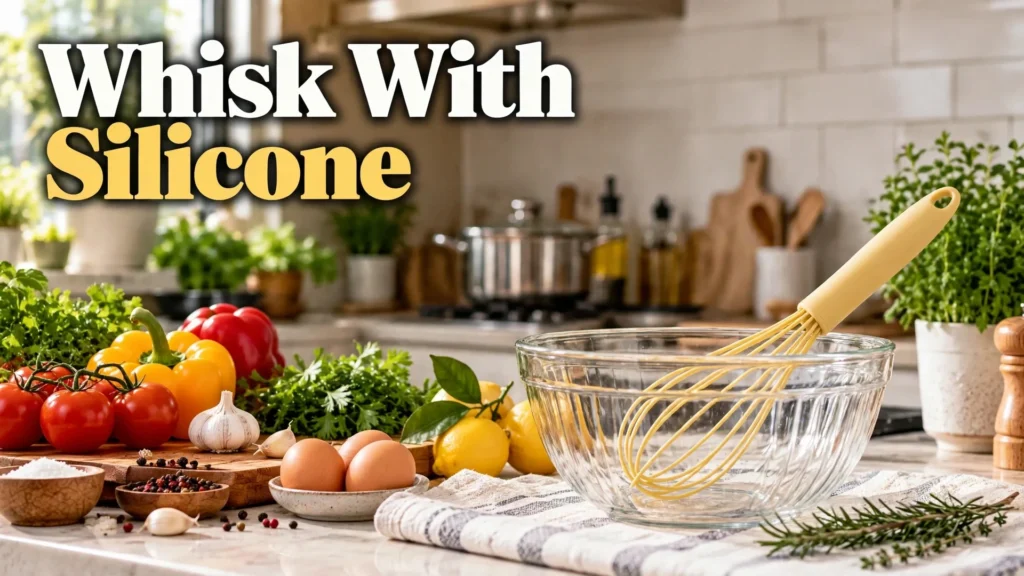
A whisk with silicone keeps the steel core for strength. The soft coating touches your pans instead of metal. You get stiff tines and zero scratches. That combo won me over fast.
What Makes a Whisk With Silicone Different
Not every coated whisk deserves your money. Construction quality varies wildly.
A real one has stainless steel wires inside. The silicone layer should feel smooth and thick. Cheap ones use thin plastic that peels off in months.
I once bought a dollar-store coated whisk. The coating bubbled after three uses. It left gray flecks in my gravy. Never again, no matter the savings.
| Feature | What I Look For | Why It Matters |
|---|---|---|
| Core material | Stainless steel | Keeps tines stiff and springy |
| Coating thickness | Thick and smooth | Survives heat and scrubbing |
| Heat rating | At least 450°F | Safe for hot sauces |
| Handle design | Sealed and solid | Stops water and rust |
A good one also resists stains. Turmeric and tomato sauce rinse right off. My white silicone spatulas taught me this first. I wrote about them in my silicone cooking utensils test. The same rule applies here: food-grade silicone cleans up easy.
I also check the seal where the head meets the handle. Gaps trap water and batter there. A one-piece or sealed design lasts years longer. Wiggle the head in the store if you can.
The 4 Tests I Run Before Keeping Any Whisk
I test every whisk in real cooking. No test kitchen needed, just dinner.
First, I whisk eggs in my nonstick skillet. Then I make a roux in the same pan. Next, I whip cream in a cold metal bowl. Finally, I stir pancake batter at speed.
| Test I Run | What It Proves | Pass Standard |
|---|---|---|
| Eggs in nonstick pan | Zero scratching | No marks after 2 minutes |
| Hot roux stir | Heat resistance | No melting or warping |
| Whipped cream | Stiffness | Soft peaks in 3 minutes |
| Pancake batter | Flexibility | Smooth, no lumps left |
My aha moment came during the roux test. My old whisk flexed like a wet noodle. The silicone one powered through like a tiny paddle.
A whisk with silicone passed all four tests for me. A plastic whisk failed the roux test badly. A cheap metal one scratched my pan instantly. Testing beats reading reviews every single time.
My Honest Pick: The StarPack Basics Silicone Whisk
I use this whisk almost daily. It earned its spot through real cooking, not marketing.

The StarPack Basics silicone whisk has a steel handle and silicone-coated wires. The teal blue coating feels thick and smooth. It weighs almost nothing but feels sturdy in hand.
I whisk eggs right in my nonstick pans now. Zero scratches after six months of daily use. Gravy, pancake batter, and salad dressings all come out smooth.
| Spec I Checked | What I Found | My Take |
|---|---|---|
| Heat resistance | Rated to 480°F | Handles roux and sauces |
| Coating | Silicone over steel | Gentle on all coatings |
| Handle | Stainless steel | Solid, easy to grip |
| Cleanup | Dishwasher safe | Rinses clean by hand too |
It is not perfect. The handle gets warm over a hot pan. I grab it with a towel when stirring long. Also, one size does not fit every bowl. I reach for a smaller whisk for mugs.
Still, for the everyday cooking most of us do, it delivers. Check out the StarPack Basics silicone whisk on Amazon. Grab the same one I use. It pairs well with the rest of my toolkit. I listed everything in my kitchen utensil set guide.
I bought this whisk expecting an average tool. Six months later it sits in my front drawer. That says more than any review I could write.
Picking the Right Size and Shape
Size matters more than brand here. The wrong size makes any whisk feel useless.
Small whisks suit mugs, ramekins, and single eggs. Medium ones handle mixing bowls and saucepans. Large whisks fit stockpots and big batter batches. Start with the middle size.
| Size | Bowl It Fits | My Best Use |
|---|---|---|
| Small, 8 inch | Mugs and ramekins | Dressings and cocoa |
| Medium, 10 inch | Mixing bowls | Eggs and pancake batter |
| Large, 12 inch | Stockpots | Soups and big batches |
Shape matters too. Balloon whisks whip air into cream and eggs. Flat whisks scrape pan bottoms for sauces. I own a balloon and a flat whisk. That duo covers 95 percent of my cooking. Both shapes now come coated.
If you cook sauces often, pair your whisk with a flat wooden spoon. I cover spoons in my cooking spoon guide for this exact reason.
Care, Cleaning, and Storage Tips
Silicone whisks last longer with tiny habits. These take seconds but add years.
Rinse your whisk right after use. Dried batter is the real enemy here. Hot water and a sponge handle most messes. The dishwasher works fine too.
| Do This | Avoid This | Why |
|---|---|---|
| Rinse right away | Soak overnight | Prevents stuck batter |
| Use soft sponge | Steel wool pads | Protects the coating |
| Hang or slot storage | Loose drawer toss | Keeps tines straight |
| Check coating monthly | Ignore peeling | Catches wear early |
Never use your whisk as a scraper on rough edges. Silicone is tough but not armor. Skip the broiler, since direct flame beats any heat rating.
My grandmother washed tools the moment she finished cooking. I thought it was fussy back then. Now I realize she never bought replacements either.
Store the whisk where tines stay round. A hook or utensil crock works great.
FAQs
Is a whisk with silicone as strong as a metal whisk?
Yes for home cooking. The stainless steel core keeps it stiff and springy. It whips cream, blends batter, and stirs sauces without flexing or breaking.
Will a whisk with silicone scratch my nonstick pans?
No, that is the whole point. The soft silicone coating touches your pans, not metal. I whisk eggs in my nonstick skillet daily with zero scratches.
Can a whisk with silicone handle high heat?
Most handle up to 450 degrees Fahrenheit or more. The StarPack whisk I use is rated to 480. Skip the broiler and direct flame always.
How do I clean a silicone whisk?
Rinse it right after use with hot water and a sponge. Most are dishwasher safe too. Avoid steel wool so the coating stays smooth and intact.
Which size whisk with silicone should I buy first?
Start with a medium 10 inch whisk. It fits mixing bowls and saucepans. Add a small one later for mugs and dressings if you need it.
Does a whisk with silicone stain from turmeric?
Quality food grade silicone resists stains well. Turmeric rinses off mine easily. Cheap plastic coatings stain faster, so buy real silicone instead.
Bottom line: a whisk with silicone protects your pans and works just as hard. I wish I had switched years earlier. If your wire whisk is scratching pans, retire it today. Grab the StarPack Basics silicone whisk and feel the difference at dinner tonight.
I stopped replacing scratched pans the day I switched. That alone paid for the whisk ten times over.